Physical Address
304 North Cardinal St.
Dorchester Center, MA 02124
Physical Address
304 North Cardinal St.
Dorchester Center, MA 02124

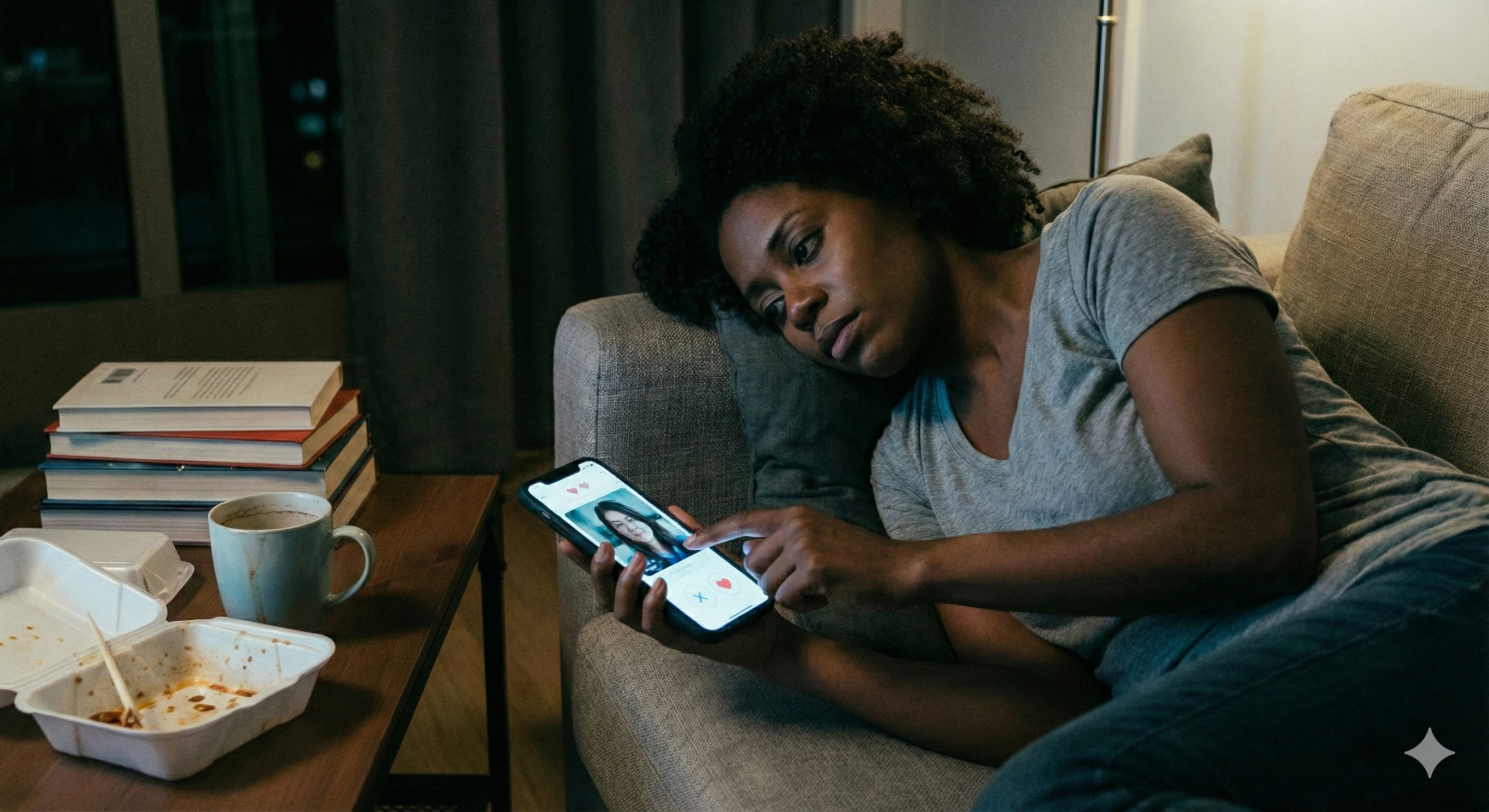
Dating apps were supposed to be the “Great Connector,” a high-tech solution to loneliness pitched as a way to filter out the noise and find your person. But if that’s true, why does opening Hinge or Tinder feel less like walking into a romantic café and more like clocking in for a shift at a factory you hate? I feel like we’re all walking around with this low-grade anxiety, referred to in psychology circles as “choice overload,” but on the street, we just call it burnout. I remember sitting down with a guy I was counseling a few years back—successful, fit, had his life together—and he looked me dead in the eye and said, “Brian, I feel like I’m shopping for a human being on Amazon, and I keep returning the package because the packaging looks different than the picture.” That hit me hard. It wasn’t arrogance; it was trauma. We aren’t wired to reject 500 people in an hour. When you do that, you aren’t just swiping left; you’re training your brain to look for flaws rather than connection.
We have to get granular about the biology here because I think we underestimate the physical toll this takes. Have you ever noticed that when a match notification dings, you get a split-second hit of excitement followed immediately by a micro-dose of dread? Your stomach tightens, your shoulders go up—that is Cortisol, the stress hormone, flooding your system. We are essentially conditioning ourselves like Pavlov’s dogs, but instead of salivating for food, we are bracing for impact. Evolutionarily speaking, humans are designed to manage a tribe of about 150 people (Dunbar’s Number). We are not designed to carry the emotional weight of thousands of potential mates in our back pocket. The apps aren’t designed to find you a partner; they are designed to keep you swiping using Intermittent Reinforcement—the same psychological mechanic behind slot machines. You pull the lever (swipe), and sometimes you get a jackpot (a match), and sometimes you get nothing. This hacks your dopamine loops. You have to break the trance. The next time you feel the compulsive need to swipe just to feel something, say this to yourself: “I am not a gambler, and my self-worth is not a chip on this table. I am using this tool to meet a person, not to chase a high. If this isn’t serving my peace, I’m logging off.”
This brings us to the “Paradox of Choice.” It sounds counterintuitive, but infinite freedom is actually paralyzing. It’s like The Cheesecake Factory menu—when you have 300 options, you don’t feel liberated; you feel stressed that you might order the wrong thing. I feel like the apps turn us all into “Maximizers”—people who need to know they made the absolute best choice possible—rather than “Satisficers,” who are happy when they find something that meets their standards. This creates the “Roster” mentality. We keep five people on the back burner not because we are players, but because we are terrified of the “opportunity cost” of settling. But you cannot build depth while you are obsessed with width. If you are spreading your emotional energy across six conversations, you aren’t actually dating; you’re conducting interviews. If you find yourself paralyzed, look in the mirror and say: “Perfection is a myth. I am looking for connection, not a custom build. By keeping one foot out the door, I am guaranteeing that this relationship will fail.” And if you need to focus on one person, be brave enough to tell them: “I’m going to pause the app to see where this goes with you, because I think you’re worth my full attention.”
We also have to acknowledge the ugly truth: this system commodifies intimacy. When you reduce a three-dimensional human being with a soul and trauma into a profile with six photos, you stop looking for connection and start looking for defects. This is where “The Ick” comes from—rejecting someone because they used the wrong emoji or like a band you hate. In the real world, oxytocin would smooth that over; on a screen, it becomes a red flag. I see a massive divide here in the “User Experience.” For many men, the app is a Ghost Town where they feel invisible and devoid of market value. For many women, it’s a Shark Tank—an overwhelming flood of low-quality or unsafe options. We need empathy for the other side. Guys, she isn’t stuck up; she’s overwhelmed. Ladies, he isn’t desperate; he’s trying to be seen. You need to move from the marketplace to the meetup immediately to re-humanize the process. Stop being a pen pal. Say this: “I’m really enjoying our chat, but I’m terrible at getting a sense of someone over text. Would you be open to a low-pressure coffee this week just to say hi?”
Finally, we have to talk about the “Sunk Cost Fallacy.” I’ve counseled people who are miserable on apps but refuse to delete them because they’ve “put in so much time.” In dentistry, if a procedure isn’t working, we don’t drill harder; we stop and reassess. Sometimes the most productive thing you can do for your love life is to stop dating for a month. The apps have birthed the “Situationship”—a gray limbo where we are intimate but not committed because nobody wants to close the door on other options. But a situationship is worse than being alone. Being alone gives you clarity; a situationship gives you anxiety. You are the CEO of your life, and the app is just a vendor. If the vendor is stressing you out, suspend the contract. If you aren’t ready to delete your account entirely, try the “Desktop Strategy”: delete the app from your phone and only use it on a computer. This adds friction and stops you from swiping while you’re bored on the toilet. It changes the dynamic from an addiction to a deliberate task.
Let’s be honest, the algorithm is powerful, but it is not destiny. It can introduce you to people, but it cannot make you connect with them. I feel like we forget that the best things in life are analog—the way eyes crinkle when someone laughs, or the shared silence in a car ride. The app is just the waiting room; your goal is to get into the exam chair and do the real work. Don’t let the fatigue turn you into a cynic. A cynic is just a romantic who got their feelings hurt and decided to stop trying. If you are burnt out, take the “Touch Grass” challenge: for 48 hours, make one genuine connection in the real world. Ask a barista how their shift is. Remind your brain that people are actually pretty cool when you look up from the screen. Before you sleep tonight, put the phone in the other room and remind yourself: “My value is not determined by an algorithm. I am worthy of love, respect, and connection. I will not rush what needs to be built, and I will not settle for a digital illusion when I deserve a real reality.”