Physical Address
304 North Cardinal St.
Dorchester Center, MA 02124
Physical Address
304 North Cardinal St.
Dorchester Center, MA 02124

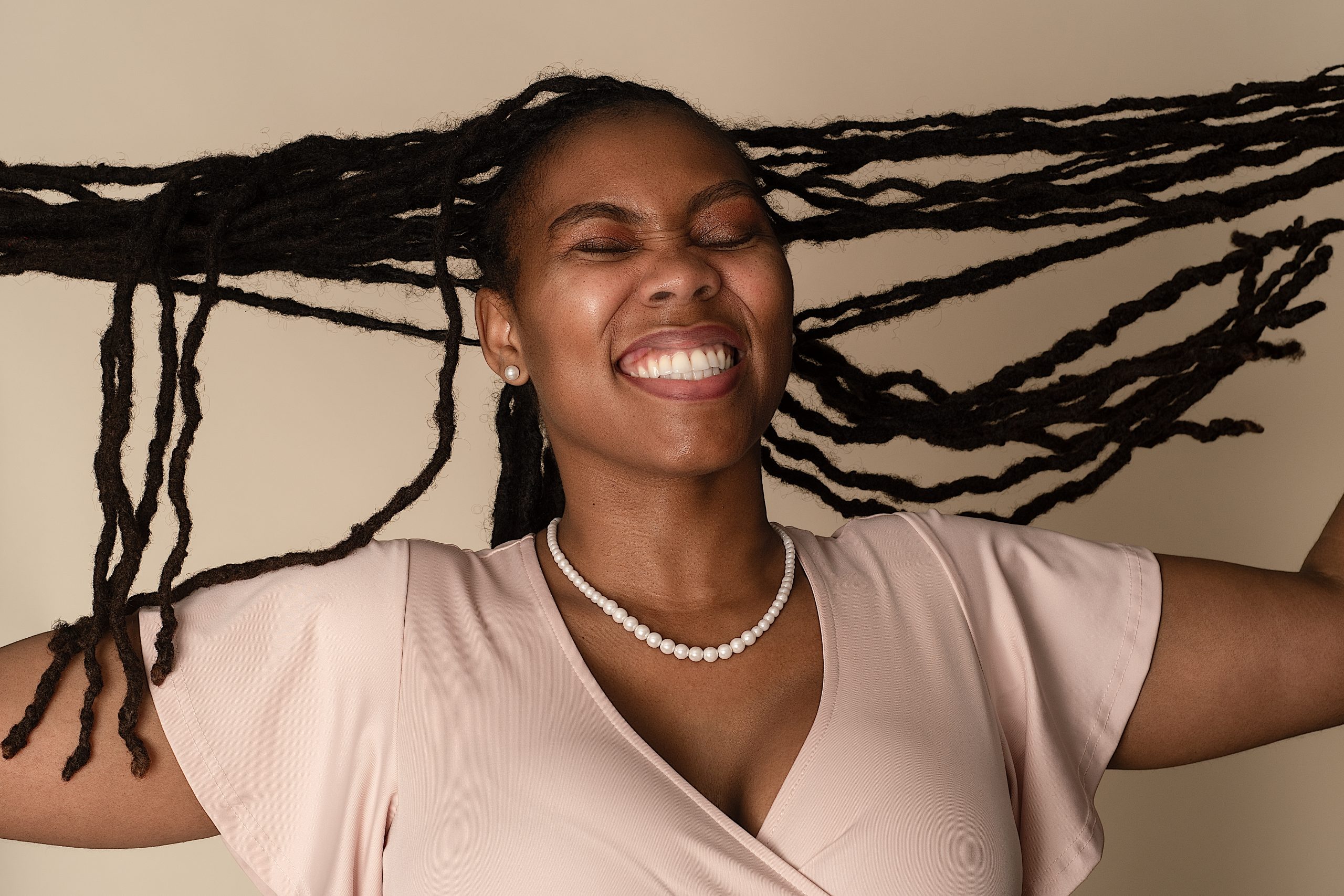
There is a woman I want you to picture.
She is somewhere between thirty-five and fifty. She is accomplished — genuinely, impressively accomplished. She has the career, the apartment that she decorated exactly the way she wanted because she didn’t have to negotiate it with anyone, the friend group, the faith she returns to even when it’s complicated, the therapist she sees every other Tuesday. From the outside, her life looks complete. Assembled. Enviable, even.
And she is exhausted in a way that sleep doesn’t fix.
Not from the work. Not from the schedule. She is exhausted from the vigilance. From the constant, low-grade alertness that comes from having been hurt enough times that her nervous system decided, somewhere along the way, that staying ready was safer than staying open. She doesn’t call it armor. She calls it knowing better. She calls it standards. She calls it not being stupid twice.
But in the quiet — in the Sunday afternoon quiet, or the late-night quiet after she’s turned off the television and the apartment is just still — there is something underneath all that accomplishment that she doesn’t talk about much. A tenderness she keeps tucked away. A capacity for love so large it frightens her sometimes. Not because she’s ashamed of it. But because every time she’s brought it out and offered it fully, something happened that made her wish she’d kept it protected.
So she stopped leading with it.
And here is what I want to talk about: what that costs her. Not in relationships — though it costs her there too — but in herself. In her spirit. In the very essence of who she was made to be.
Let’s name what we’re actually talking about when we say a woman is “operating in the masculine.” Because this phrase gets thrown around in ways that are sometimes helpful and sometimes just another way to criticize Black women without taking responsibility for what created the condition.
This is not about strength. Black women’s strength is not the problem. Let me say that again, clearly, so there is no misreading: the strength of Black women is not the problem. It is one of the most extraordinary forces in human history. It built this country in ways that remain criminally unacknowledged. It held families together through conditions designed to destroy them. It pastored churches, raised children, buried husbands, started businesses, marched in streets, and somehow still showed up on Monday morning. That strength is sacred.
What we are talking about is something different. We are talking about what happens when a woman has been required — by circumstance, by disappointment, by a world that did not adequately protect her — to suppress the other parts of herself. The receptive parts. The soft parts. Not weak parts — soft is not the same as weak, and we need to stop confusing them. The parts that allow her to receive love, not just give it. To be held, not just hold. To be chosen, not just choose. To be seen in her vulnerability, not just admired in her strength.
When those parts go underground — when they have to, because bringing them out has historically resulted in pain — something shifts. The warmth doesn’t disappear. It just goes somewhere else. It goes into the work. Into the friends. Into the nieces and nephews. Into the church. Into every place where love feels safer because it doesn’t require her to be fully exposed.
And the dating landscape becomes a transaction to be managed rather than a mystery to be entered.
There is a spiritual dimension to this that the secular conversation almost always misses, and I think it’s the most important part.
Most Black women were raised in a faith tradition — Baptist, AME, Pentecostal, Catholic, Muslim, whatever the particular expression — that placed love at the absolute center of everything. Not romantic love specifically, but love as a posture. Love as a way of moving through the world. Love as the thing that, in the words of the tradition, never fails. That covers. That endures. That believes all things, hopes all things, bears all things.
That theology didn’t just stay in the sanctuary. It shaped Black women’s entire orientation toward community, toward family, toward relationship. The Black woman who shows up with a covered dish when someone is sick. Who prays over her children every morning. Who forgives, sometimes past the point that wisdom would recommend, because forgiveness is in her spiritual DNA. Who loves her community even when her community doesn’t always love her back at the same volume.
That love — that love — is not weakness. It is one of the most powerful forces on earth. A Black woman’s love, operating in full, can hold a family together through grief. Can give a child the foundation to survive a world that wasn’t built for them. Can inspire a man to become something he didn’t know he was capable of. That is not mythology. That is documented in the lives of people we know personally.
But something happens when that love gets wounded enough times without being properly tended to. When it is offered and not honored. When it is given and taken without being returned. When the world — including, sometimes, the men in her community — treats her love as a resource to be extracted rather than a gift to be received with care.
It doesn’t disappear. It armors up. It puts on the voice that says I don’t need anyone. It builds the checklist. It starts evaluating instead of experiencing. It protects itself the only way it knows how.
And the tragedy is not just that love gets harder to find in those conditions. The tragedy is what it does to her — to the woman herself — to spend years, sometimes decades, operating from that armored place. To slowly lose access to the part of yourself that was always your greatest gift.
I want to speak to something generational here, because I think we are not talking about it enough.
There are daughters watching their mothers right now. Girls growing up in households where the lesson about love — never spoken out loud, never written down, but communicated in every sigh and every side-eye and every comment about men — is that love is a liability. That openness is naivety. That the woman who gives her whole heart is the woman who ends up with nothing.
Those daughters are internalizing a curriculum. And when they enter their own relationships — in their twenties, in their thirties — they are going to arrive already defended. Already evaluated. Already a little bit closed in places that should be open. Not because they chose that. Because they were taught it by women they loved, who were taught it by women they loved, who learned it the hard way in conditions that genuinely warranted it.
We are passing down armor as inheritance. And we have to decide, at some point, whether that is the legacy we mean to leave.
This is not a criticism of the mothers. God knows those women had reasons. What I am saying is that the daughter deserves the full picture — the pain and the possibility. She deserves to know that her grandmother’s caution was wisdom born of specific wounds, not universal truth. That love, entered carefully and discerningly and with full self-respect, remains one of the most transformative forces available to her. That the armor is not her birthright. The love is.
Here is what I believe, and I want to say it plainly:
A Black woman who stops leading with love does not become invulnerable. She becomes unavailable. And there is a profound difference between those two things.
Invulnerable means protected. Unavailable means isolated. And isolation — no matter how elegantly furnished, no matter how professionally accomplished, no matter how spiritually maintained — is not flourishing. It is survival dressed up in good lighting.
You were not made for survival. You were made for life in its fullness. And the fullness of life, for most people, includes the terrifying and magnificent experience of being fully known and fully chosen by someone who sees all of you — the strength and the softness, the accomplishment and the uncertainty, the faith and the doubt — and decides, deliberately, that you are the one they want to build with.
That experience is not available to the version of you that has decided she cannot afford to be seen.
And so the question becomes — not “should I open up?” because I already know the answer you’ve been taught to give to that — but rather:
What would it look like to lead with love again, without abandoning the wisdom you’ve earned?
Because those two things are not mutually exclusive. You do not have to choose between being open and being wise. You do not have to choose between softness and discernment. The goal is not to go back to the version of yourself that got hurt. The goal is to move forward into a version of yourself that is both rooted in love and grounded in clarity. That knows what she will not accept and still believes in what she is building toward.
That woman — open and wise, soft and grounded, loving and clear — is the most powerful version of you that exists.
And she is also, I would argue, the version of you that the right man has been hoping to find.